What Is BWP Plywood? Meaning, Uses and How to Check It

On this page 6 sections
Key takeaways
- BWP describes the glue, not the wood: the layers stay bonded when the board gets wet, but cut edges and faces still need sealing and finishing.
- Use BWP or marine plywood for kitchen sink and hob units, bathroom vanities, utility areas and exteriors; BWR is enough for wardrobes, beds and kitchen units away from water.
- BWP is made to IS 303, the standard for general-purpose plywood, while marine plywood is made to IS 710 with higher-grade veneers and tighter tolerances for constant contact with water.
- A genuine BWP sheet has its grade, standard and manufacturer printed on it, comes from the manufacturer or its dealer, and has its grade written on your invoice.
BWP (boiling waterproof) plywood is plywood whose layers are bonded with phenol-formaldehyde resin, a glue that holds even in boiling water. That makes it the grade to use wherever wood gets wet regularly: kitchen sink and hob units, bathroom vanities, utility areas and exteriors. In India it is made to IS 303, the general-purpose plywood standard.
What BWP Means
BWP stands for boiling waterproof. The name describes the glue, not the wood: the bond between the veneers survives boiling water, so the sheet does not come apart when it gets wet.
Plywood is made from thin sheets of wood, called veneers, glued together with the grain of each layer at right angles to the next. In most plywood the glue is the weak point when water gets in. Once it softens, the layers separate (delamination), the sheet swells and screws work loose. BWP plywood is bonded with phenol-formaldehyde (phenolic) resin, which cures hard in the hot press and does not break down in water, so the layers stay together through repeated wetting and drying.
Two things follow from this:
- Waterproof glue does not make the wood waterproof. The wood still takes up moisture through cut edges and unfinished faces, so edges need sealing or edge banding, and no plywood should be left standing in water.
- BWP is a grade, not a brand or a type of wood. IS 303, the Indian Standard for general-purpose plywood, covers three grades: MR (moisture resistant), BWR (boiling water resistant) and BWP. Marine plywood has its own standard, IS 710.
BWP vs BWR vs Marine Plywood
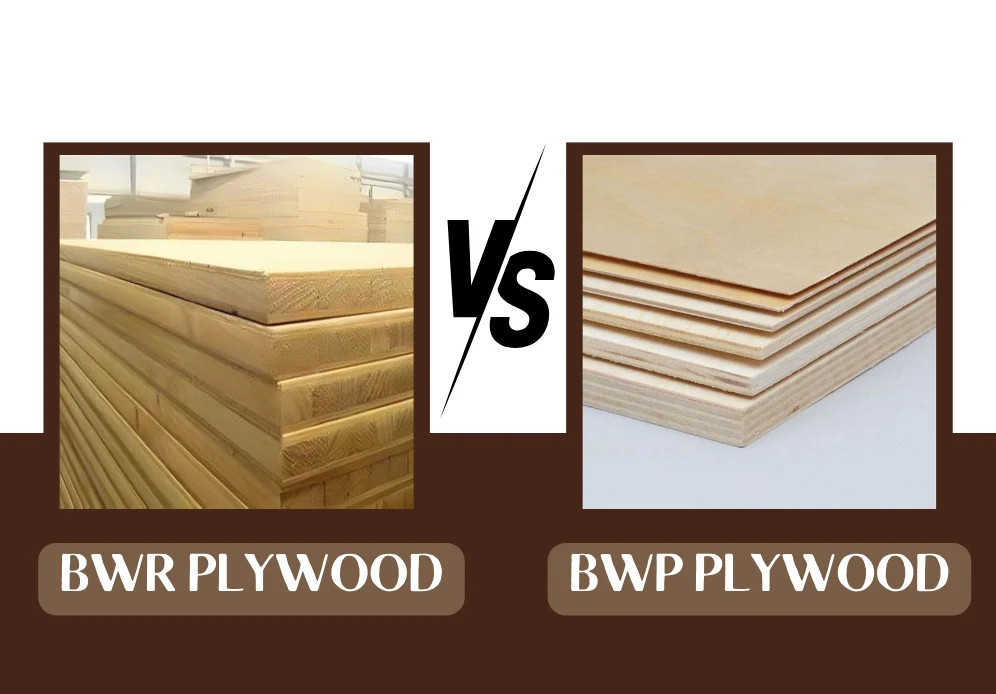
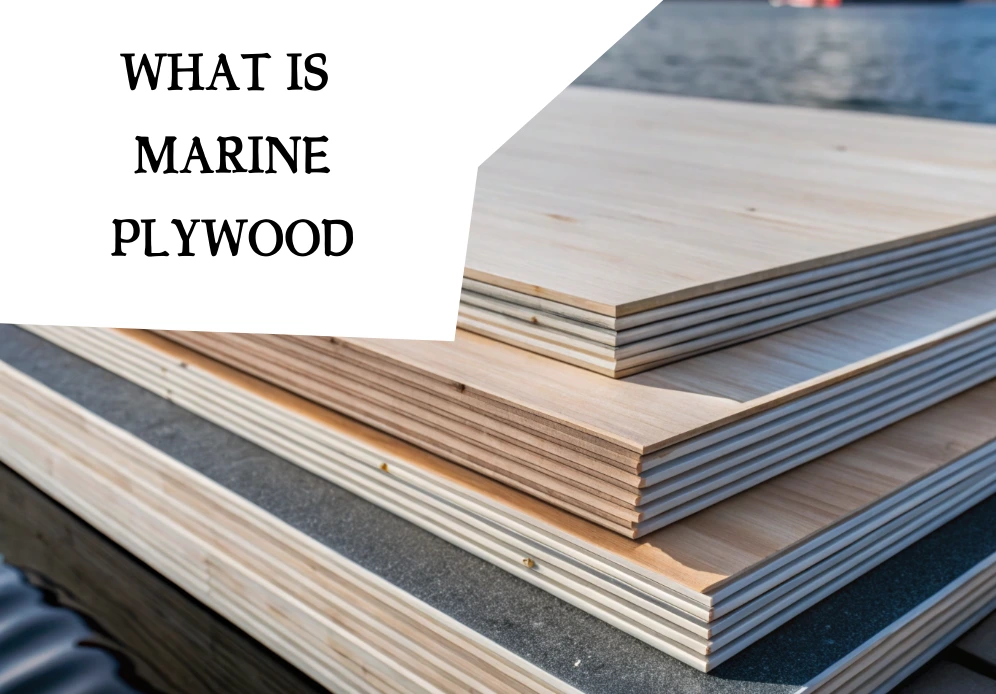
BWR and BWP differ mainly in the glue: BWR resists moisture and humidity, while BWP is waterproof. BWP and marine plywood use the same kind of waterproof phenolic glue; marine plywood adds higher-grade veneers and tighter tolerances, because it is meant for wood that stays in contact with water.
| BWR | BWP | Marine | |
|---|---|---|---|
| Full name | Boiling water resistant | Boiling waterproof | Marine plywood |
| Indian Standard | IS 303 (general-purpose plywood) | IS 303 (general-purpose plywood) | IS 710 (marine plywood) |
| Glue bond | Resists moisture and humidity; not made for regular wetting | Phenolic resin; holds in boiling water | Phenolic resin, as in BWP |
| Veneers and core | General-purpose | General-purpose | Higher-grade veneers, tighter tolerances |
| Use it for | Wardrobes, beds, shelves, kitchen units away from water | Kitchen sink and hob units, bathroom vanities, utility areas, exteriors | Constant contact with water, such as boats and docks; any wet area where you want the most margin |
| More than you need for | Dry interiors, where MR is enough | Dry bedrooms, living rooms and offices | Most home furniture away from water |
In plain words, IS 303 sets the rules for everyday plywood in three grades, and a BWP sheet is everyday plywood made with the waterproof glue. IS 710 is a separate, stricter standard written for marine use: the glue must be boiling-waterproof as well, but the standard also asks more of the wood that goes into the sheet and how well it is put together. For a home, BWP covers the parts that get wet regularly. For a closer look at the marine grade, read our marine plywood guide.
Where to Use BWP Plywood, and Where It Is Overkill
Use BWP wherever the wood will actually get wet, not just sit in humid air. Where furniture stays dry, BWP adds nothing useful, and BWR or MR plywood does the job.
| Where | Grade to choose | Why |
|---|---|---|
| Kitchen sink unit | BWP or marine | Leaks from pipes, the sink or a water purifier, splashes and wet mopping |
| Hob (cooktop) unit | BWP or marine | Spills, steam and frequent wiping |
| Bathroom vanity and bathroom cabinets | BWP or marine | Splashes and constant humidity |
| Utility and washing-machine area | BWP or marine | Water from washing and leaking hoses |
| Exteriors (balcony furniture, outdoor panels) | BWP or marine, finished and sealed | Rain, sun and changing humidity |
| Kitchen units away from the sink and hob | BWR | Humidity, but no regular water |
| Wardrobes, beds, shelves, TV units | BWR | Normal indoor humidity |
| Dry interior panelling and partitions | MR or commercial | No water exposure |
The common mistake is BWR under the kitchen sink. A slow leak from the sink trap or a purifier connection can soak the base of the unit for days before anyone notices, and that is exactly the situation BWP is made for. The opposite mistake does no harm but gains nothing: BWP in a bedroom wardrobe or a bookshelf does not make it stronger or better looking, because its only advantage, the waterproof bond, is never used. Grade is one of the main factors that sets the cost of a sheet, so match the grade to the room. Our BWR vs BWP comparison goes through this room by room.
Grade decides how the board copes with water; thickness decides its strength. Whatever the grade, carcasses are usually 18–19 mm, backs and drawer bottoms 6 mm, and light partitions and panels 12 mm.
How to Tell a Genuine BWP Sheet
You cannot see the glue by looking at a sheet's face, so rely on the marking and the paperwork: the grade, standard and manufacturer printed on the sheet, buying from the manufacturer or its dealer, and the grade written on your invoice.
- Read the marking on every sheet. It should show the grade (BWP), the standard it is made to (IS 303 for BWP, IS 710 for marine) and the manufacturer's name. "BWR" and "BWP" look alike at a glance, so read it properly. A sheet sold as BWP with no marking is a warning sign.
- Buy from the manufacturer or a dealer it supplies. Ask the dealer whose plywood it is, and check that the name on the sheets matches.
- Get the grade in writing. Ask for the grade, thickness and manufacturer to be written on the quote and the invoice. If a board fails, that paper shows what you paid for.
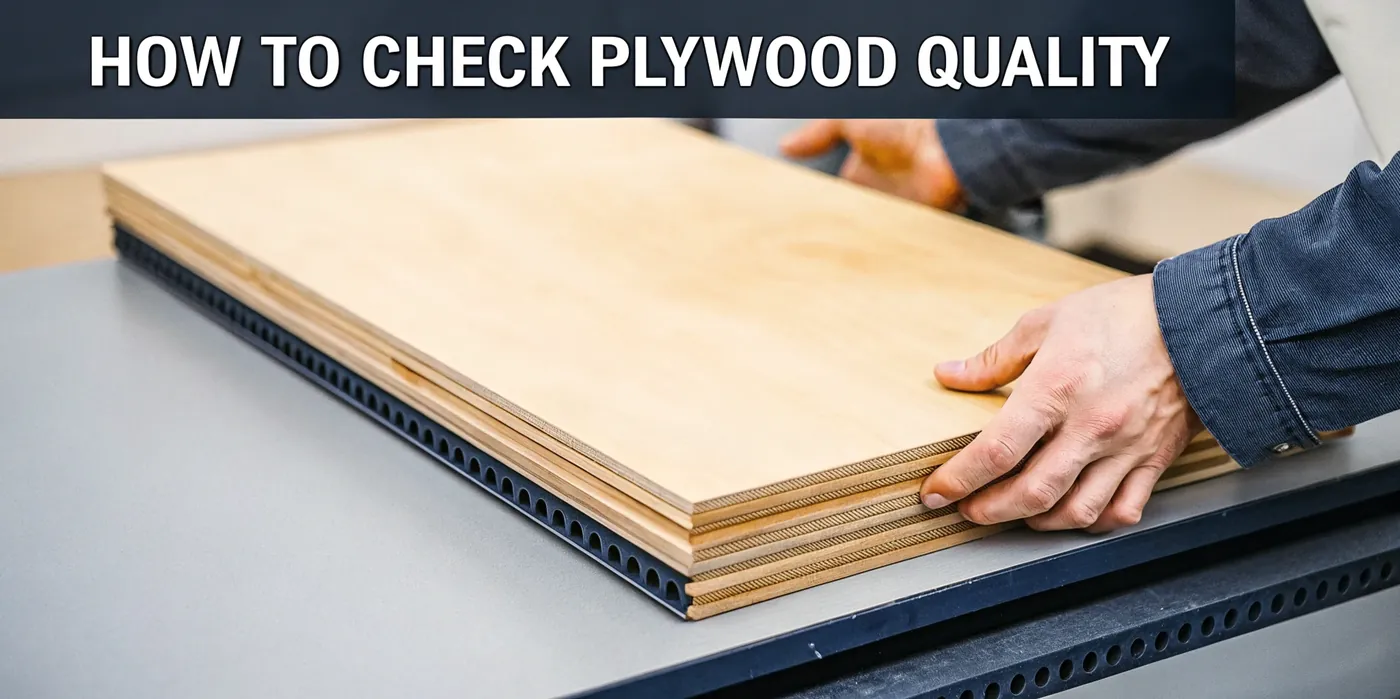
- Check how the sheet is made. Look at the edges for gaps, overlaps or loose layers, and check that the sheet is flat and of even thickness. This does not prove the glue grade, but it does show the standard of workmanship. Our guide on how to check plywood quality covers these checks in more detail.
Looking After BWP Plywood
BWP's glue is waterproof but the wood is not, so the care is about keeping water out of the edges and not letting it stand.
- Seal every cut edge. Edge-band or seal all edges, including the holes cut for pipes, taps and the sink. Water usually gets in at an unsealed edge.
- Finish the faces. In sink units, finish the inside of the cabinet as well as the outside, so no bare wood is left open to splashes.
- Fix leaks quickly and wipe up standing water. No plywood should be left sitting in water.
- Store sheets flat in a dry, ventilated place before they are used, so they stay flat.
- Clean with a dry or slightly damp cloth and avoid harsh chemicals.
For sealants, paints and other ways to protect a board, see our guide to waterproofing plywood.
For kitchens, bathrooms and other wet areas, you can see the grades MRS Woodcraft makes and ask for a quote on our plywood page.
Frequently Asked Questions
Can BWP Plywood Be Used Outdoors?
Yes. BWP and marine plywood are made for wet and exterior conditions. Outdoors, protect the faces and edges with an exterior-grade paint, polish or sealant, refresh it when it wears, and keep the board out of standing water. For wood that stays in contact with water, such as on boats or docks, choose marine plywood.
Can BWP Plywood Be Painted, Polished or Laminated?
Yes. It takes laminate, veneer, polish and paint like any other plywood. For paint, sand the surface lightly and use a primer first; outdoors, use an exterior-grade finish.
Is BWP Plywood Termite-Proof?
Not because of its glue. Waterproof resin keeps the layers together but does not on its own stop termites or borers; that protection comes from chemical treatment during manufacture. Ask the manufacturer what treatment the sheet has had. MRS plywood, for example, has its glue line chemically treated against borers.