Types Of Plywood For Wardrobes: Choosing The Right Material
On this page 7 sections
For most bedroom wardrobes, moisture-resistant (MR) plywood is sufficient; if the wardrobe stands somewhere damp or humid, such as near a bathroom or kitchen, choose BWR, BWP or marine plywood instead. Use plywood at least 18mm thick for panels, shutters and shelves, and thinner sheets for the back.
Plywood is a popular wardrobe material because it is durable, affordable and versatile, and the right grade holds up to India's varied climate. Below are the types to choose from, how to pick between them, which type suits each part of a wardrobe, and how to look after it.
Advantages Of Using Plywood For Wardrobes
Plywood offers a good balance of looks and function, which makes it ideal for modern interiors. Here are its key advantages for wardrobes:
1. Durability And Strength
Plywood is made from thin layers of wood veneer, called plies, glued together with the grain of each layer running across the next. This cross-layered structure makes it strong and stable, resistant to warping, cracking and bending, and able to bear heavy loads of clothes, accessories and other items. Unlike particle board, it stays sturdy over time even with frequent use, and it holds screws firmly. Its longevity makes it good value for money and a trusted furniture material.
2. Moisture Resistance
Plywood, especially marine-grade and waterproof varieties, offers better moisture resistance than solid wood. This makes it suitable for wardrobes in humid spots, such as near kitchens or bathrooms, where it resists swelling, warping and fungal growth and keeps the wardrobe intact and hygienic. A proper finish adds further protection against spills and damp.
3. Versatility In Design
Plywood comes in various grades, finishes and thicknesses to suit different wardrobe styles. Its smooth surface can be laminated, veneered or painted to match any look, from rustic to ultra-modern, so designers can experiment with textures and patterns that complement the rest of the room.
4. Lightweight And Easy To Work With
Plywood is much lighter than solid wood, which makes it easier to handle during construction, transport and installation without compromising strength, so it suits large wardrobes. It is also easy to cut, drill and finish, which speeds up installation and improves precision. Carpenters and DIY enthusiasts prefer it for its ease of customisation during assembly or repair.
5. Cost-Effective Solution
Compared with solid wood, plywood is a more economical choice with comparable strength and durability. It gives the look and feel of natural wood for less, which makes it attractive for homeowners who want good-quality, stylish furniture on a budget.
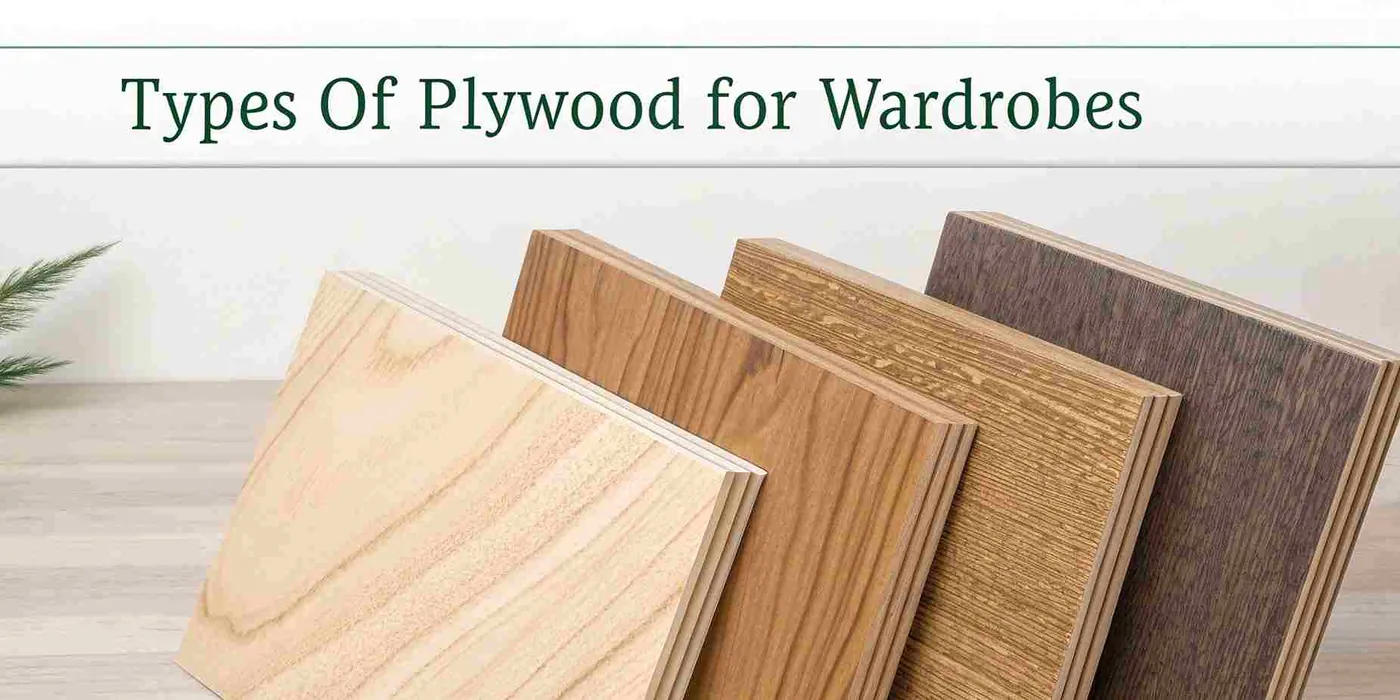
Types Of Plywood For Wardrobes
Each type of plywood suits a different location, budget and design. These are the types most commonly used for wardrobes:
1. Commercial Plywood
- Components: Thin veneer layers glued together with resin.
- Best for: Wardrobes in dry interior areas, and back panels or other non-load-bearing parts.
- Advantages: One of the most cost-effective options; lightweight, easy to work with and reliable for general purposes.
- Disadvantages: Less resistant to moisture than the other types.
Read more about commercial plywood.
2. Moisture-Resistant (MR) Plywood
- Components: Treated to resist moisture, but not waterproof.
- Best for: Interior wardrobes in dry or mildly humid rooms such as bedrooms and living rooms.
- Advantages: More affordable than BWR or marine plywood, yet gives better protection against humidity than regular commercial plywood; easy to maintain.
- Disadvantages: Not ideal for areas with prolonged exposure to water.
See our guide to MR plywood.
3. Boiling Water Resistant (BWR) Plywood
- Components: Designed to withstand boiling water and steam.
- Best for: Wardrobes with occasional moisture exposure, such as near a kitchen, bathroom or laundry room, or in coastal areas.
- Advantages: Better strength and moisture resistance than MR plywood, making it a reliable long-term choice.
- Disadvantages: Pricier than MR plywood.
4. Boiling Waterproof (BWP) Plywood
- Components: Made using phenolic resins.
- Best for: Wardrobes in bathrooms or rooms with high humidity.
- Advantages: Highly resistant to water, fungal growth and insects, so the wardrobe stays durable and unaffected by moisture over time.
For the differences between the two water-resistant grades, see BWR vs BWP plywood.
5. Marine Plywood
- Components: Layers bonded with waterproof adhesive.
- Best for: Wardrobes in very humid or high-moisture areas, such as bathrooms and kitchens.
- Advantages: High resistance to water, rot, mildew, fungal growth and warping, so it stays in good condition over time.
- Disadvantages: Expensive compared with commercial plywood.
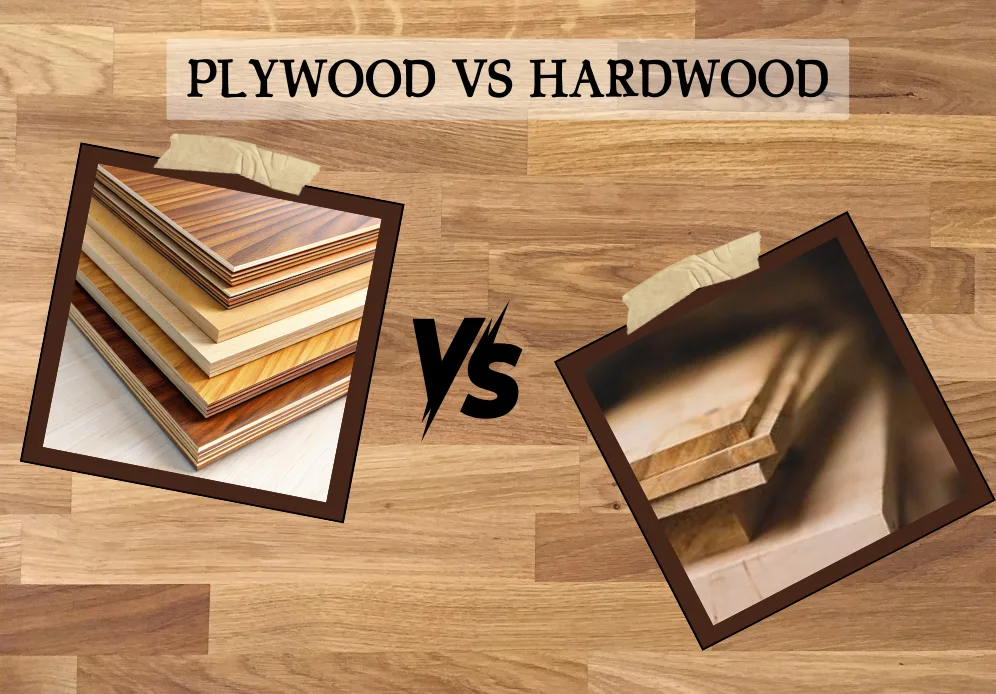
6. Hardwood Plywood
- Components: Hardwood veneer layers, from species such as teak or birch.
- Best for: Heavy-duty and premium wardrobes that need high load-bearing capacity and a fine finish, especially for visible parts such as shelves, doors and decorative elements.
- Advantages: Superior strength, resistance to wear and tear, and a smooth surface with a rich appearance.
- Disadvantages: Heavier and costlier than softwood alternatives.
7. Flexible Plywood
- Components: Bendable layers made for curved designs.
- Best for: Wardrobes with rounded, curved or intricate shapes.
- Advantages: Allows creative designs.
- Disadvantages: Requires professional installation.
8. Fire-Resistant Plywood
- Components: Treated with fire-retardant chemicals.
- Best for: Safety-conscious households and commercial spaces.
- Advantages: Adds an extra layer of safety.
- Disadvantages: More expensive than standard plywood.
How To Choose The Right Plywood For Your Wardrobe
The right plywood keeps a wardrobe strong, functional and good-looking for years. Consider these factors:
1. Match Moisture Resistance To The Room
For dry bedrooms and living rooms, MR plywood is sufficient. If the wardrobe is in a damp or humid spot, choose BWR, BWP or marine plywood, which resist swelling, warping and fungal growth and keep your belongings safe. Waterproof grades are not mandatory everywhere, but in moisture-prone areas they reduce the risk of damage and make the wardrobe last longer.
2. Evaluate Thickness
Thickness affects the strength, stability and load-bearing capacity of the wardrobe. For panels, shutters and shelves, use plywood at least 18mm thick so it supports the weight without sagging; 19mm is the usual recommendation for wardrobe panels. Plywood of 6mm to 12mm works well for back panels and partitions, and thinner sheets can be used for decorative elements. Going thinner on load-bearing parts compromises durability. Our guide to plywood thickness covers the options in detail.
3. Check The Core And Build Quality
The durability of plywood depends on its core and layers. Look for a tightly bonded core, which avoids warping over time, and choose hardwood plywood where strength matters most.
4. Look For Quality Marks And Certification
Buy plywood from reputable brands and look for certification such as the ISI mark. For indoor furniture, E1 emission standards indicate safety from harmful emissions. Certified plywood should be free from defects like warping or delamination, ensuring long-term performance.
5. Choose The Finish
Plywood comes raw or pre-laminated. Pre-laminated plywood has a ready-to-use surface in matte, glossy or textured finishes, which saves time and effort. If you plan to apply laminate, veneer or paint yourself, the board needs a smooth, uniform surface that suits that treatment; calibrated plywood is an excellent choice for a flawless finish. See veneer vs laminate to compare the two main finishes.
6. Pest And Termite Resistance
Wardrobes are susceptible to termite attack, especially in humid climates. Choose plywood pre-treated for termite and pest resistance, particularly if you live in an area prone to infestations, to prevent damage and extend the wardrobe's life.
7. Budget
The cost of plywood varies with quality, grade, type, brand and thickness, so ask a supplier for a current quote. Premium grades cost more but give better durability and finish. Balance quality and cost without compromising on the moisture resistance your wardrobe's location needs.
Applications Of Plywood In Wardrobes
Different parts of a wardrobe call for different plywood types:
1. Shelves
- Strength and load-bearing capacity: Shelves carry heavy loads such as clothing, accessories and footwear. Hardwood plywood is a prime choice because it holds heavy items without sagging or warping over time.
- Alternative options: For wardrobes in dry or semi-humid rooms, MR plywood is more affordable than hardwood plywood and durable enough for standard shelving.
- Edge-banding: Edge-banding on the shelf fronts stops the plywood edges from chipping, gives a smooth finish and makes the shelves more resistant to damage.
2. Doors
- Creative and unique designs: Doors are a major design feature of any room. Flexible plywood can be bent into curved or uniquely patterned shapes, giving more design freedom than traditional plywood for both modern and traditional styles.
- Durability in high-moisture areas: If the wardrobe stands in a humid room or next to a bathroom, BWR plywood keeps the doors durable and resistant to warping; for anything inside a bathroom, use BWP or marine plywood.
3. Back Panels
- Lightweight and cost-effective: Back panels carry little weight but give the wardrobe structural stability, secure its contents and give it a finished look. Commercial plywood is ideal here because it is cost-effective, lightweight and strong enough.
- Appearance and moisture resistance: Laminating the back panels improves their looks and moisture resistance, and adds a protective layer that reduces wear and tear.
4. Frames
- Structural integrity and strength: The frame is the foundation of the wardrobe and provides its overall stability. BWR or marine plywood is the best choice for frames, particularly in high-moisture or humid areas, because of its strength, durability and water resistance.
- Long-term durability: Termite-treated plywood keeps the frame structurally sound over time, which is particularly important in humid regions or older homes where pests are a concern.
Tips For Maintaining Plywood Wardrobes
Regular upkeep and a few protective measures keep a plywood wardrobe durable and good-looking for years:
- Keep it clean and dry: Wipe surfaces with a dry or slightly damp cloth, and dust the inside and outside weekly to prevent moisture and debris building up.
- Use mild cleaners only: Harsh cleaning agents can damage the finish.
- Clean spills promptly: Wipe off liquid quickly to avoid water stains or swelling.
- Protect and polish the surface: Varnish or laminate shields the plywood from scratches, stains and moisture, and a suitable wood polish applied periodically maintains the shine.
- Seal exposed edges: Apply edge banding to stop water or air seeping in.
- Control humidity: In humid climates, place silica gel or a dehumidifier inside the wardrobe to prevent mould and swelling.
- Keep away from sun and heat: Prolonged direct sunlight can fade or crack the finish, and heat sources such as heaters can dry out or weaken the wood.
- Inspect for wear or pests: Check for termite damage or warping and deal with it immediately.
- Protect surfaces: Put mats under heavy or sharp objects to prevent dents and scratches, and use drawer liners to protect drawers and make cleaning easier.
- Avoid overloading shelves: Too much weight causes sagging or damage.
- Lubricate hinges: Oil hinges and sliding mechanisms regularly so they run smoothly and do not rust.
Conclusion
There is a plywood type for every wardrobe need, from moisture-resistant grades for damp rooms to flexible plywood for curved designs. Consider where the wardrobe will stand, which part you are building, your budget and the local climate before deciding, and regular maintenance will further extend its life. MRS Woodcraft supplies moisture-resistant and termite-resistant plywood for furniture and wardrobes; browse our plywood range or ask for a quote.
Frequently Asked Questions
What Is The Difference Between MR, BWR And BWP Grade Plywood?
They differ in how much water they can take. MR grade is moisture resistant, BWR grade is boiling water resistant and BWP grade is boiling waterproof, with water resistance increasing from MR to BWP.