What Is Gurjan Plywood?
On this page 6 sections
Key takeaways
- Gurjan is the trade name for dense, reddish-brown hardwoods of the Dipterocarpus genus, the same timber sold as keruing in Malaysia and Indonesia.
- Gurjan is used as a face veneer because its hard, even surface resists dents, holds screws well, adds stiffness and takes laminate or polish cleanly.
- Gurjan describes the wood, not the glue: a gurjan-faced sheet can be MR, BWR or BWP, so choose the grade for the room.
- Colour, grain and weight are only clues; ask for the face veneer and the grade to be written on your quote and invoice.
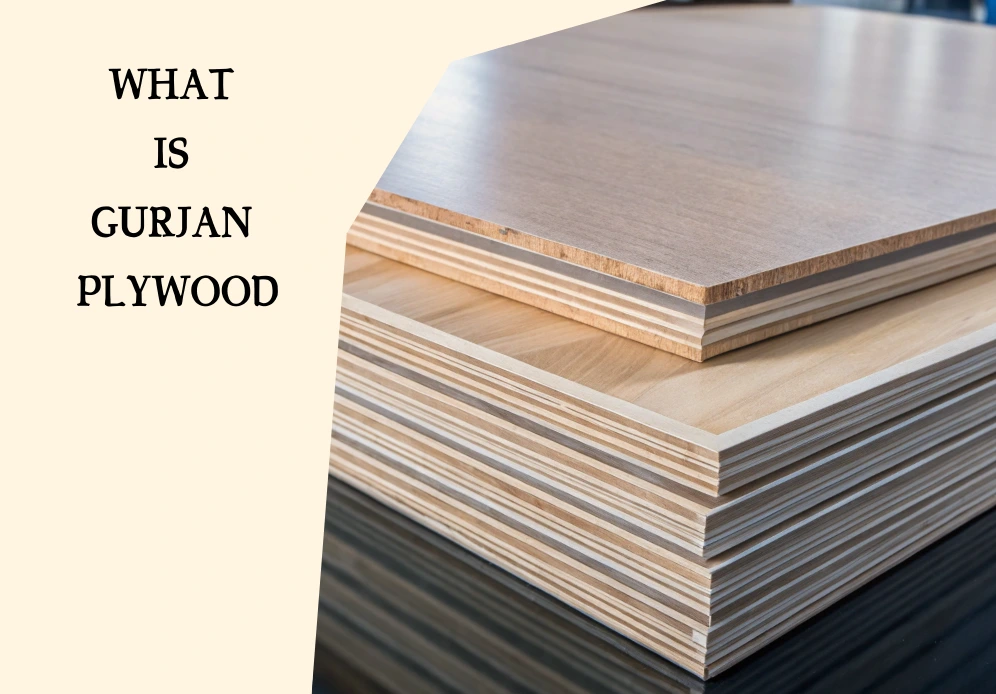
Gurjan plywood is plywood faced, and sometimes made throughout, with veneers of gurjan, a dense reddish-brown hardwood from South and Southeast Asia. Gurjan is valued as a face veneer because its hard, even surface resists dents, holds screws and takes laminate or polish well. How the sheet copes with water depends on its grade, not on gurjan.
What Gurjan Wood Is
Gurjan (also spelt gurjun) is the trade name for hardwoods of the Dipterocarpus genus, tall trees that grow in South and Southeast Asia, including parts of India. The same timber is sold as keruing in Malaysia and Indonesia and as apitong in the Philippines.
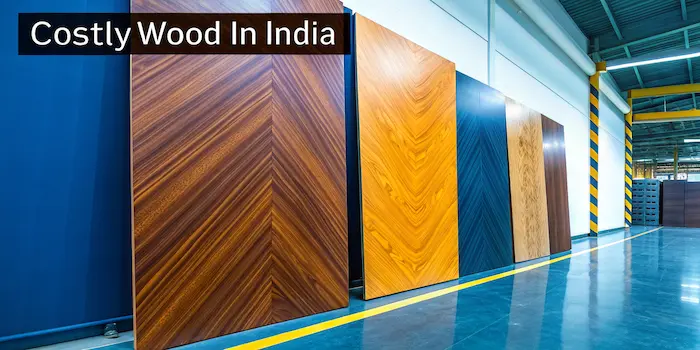
The wood is reddish-brown to pinkish-brown, with a fairly straight grain and a slightly coarse, even texture. It is dense and strong, and it contains natural resin, which can show as small spots or streaks on the surface. The trees grow tall with long, straight trunks, which peel into wide, clean sheets of veneer.
Why Gurjan Is Used as a Face Veneer
The face veneers are the layers you see and touch, and they take most of the wear and much of the load when a panel bends. Manufacturers therefore put a hard, strong, even-textured wood on the faces, and gurjan fits well.
- A hard face. Dense gurjan resists dents and scratches better than light, soft timbers.
- Good screw and nail holding. The dense face grips fixings for hinges, handles and fittings.
- Stiffness. When a panel bends, the outer layers do most of the work, so a strong face veneer helps a shelf or shutter stay straight.
- A smooth, even surface. It takes laminate, veneer, polish or paint cleanly.
- Wide, clean veneers. Long, straight logs give large face veneers with fewer joints.
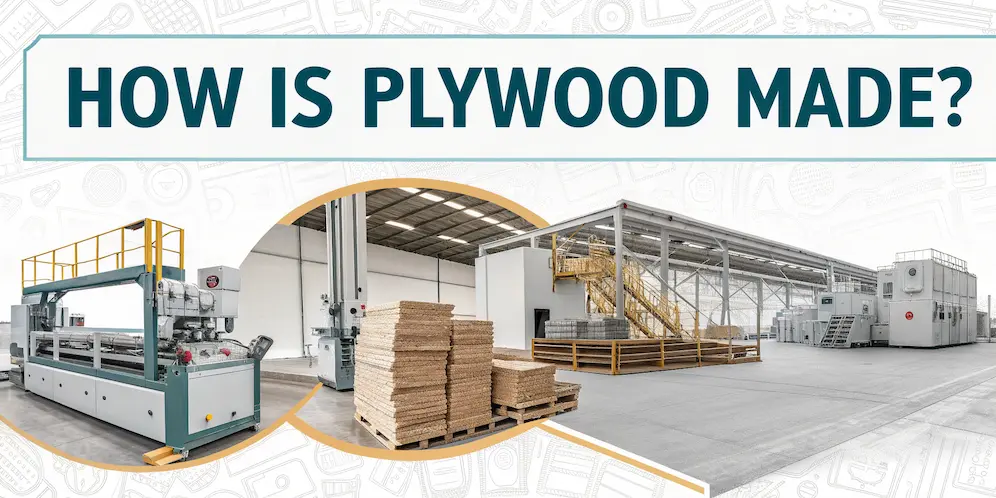
A common construction in India is gurjan faces over a core of lighter plantation timber such as poplar or eucalyptus, which gives a hard face without making the whole sheet as heavy as solid gurjan. You can see where the faces go in the process in our guide to how plywood is made.
Types of Gurjan Plywood
"Gurjan plywood" can mean a sheet with gurjan only on the faces or one with gurjan throughout, and each can be made in different grades. Ask the seller which one you are being offered, because the word "gurjan" on a quote can mean either.
| Type | What it is | Good to know |
|---|---|---|
| Gurjan-faced plywood | Gurjan face veneers over a core of other timber, such as poplar or eucalyptus | The usual meaning of "gurjan plywood" in the market; the core decides much of the weight |
| All-gurjan (hardwood) plywood | Gurjan veneers in the faces and the core | Denser and heavier throughout |
| Gurjan-faced block board | Gurjan face veneers over a core of solid wood battens | Stays straight over long spans; meant for dry areas |
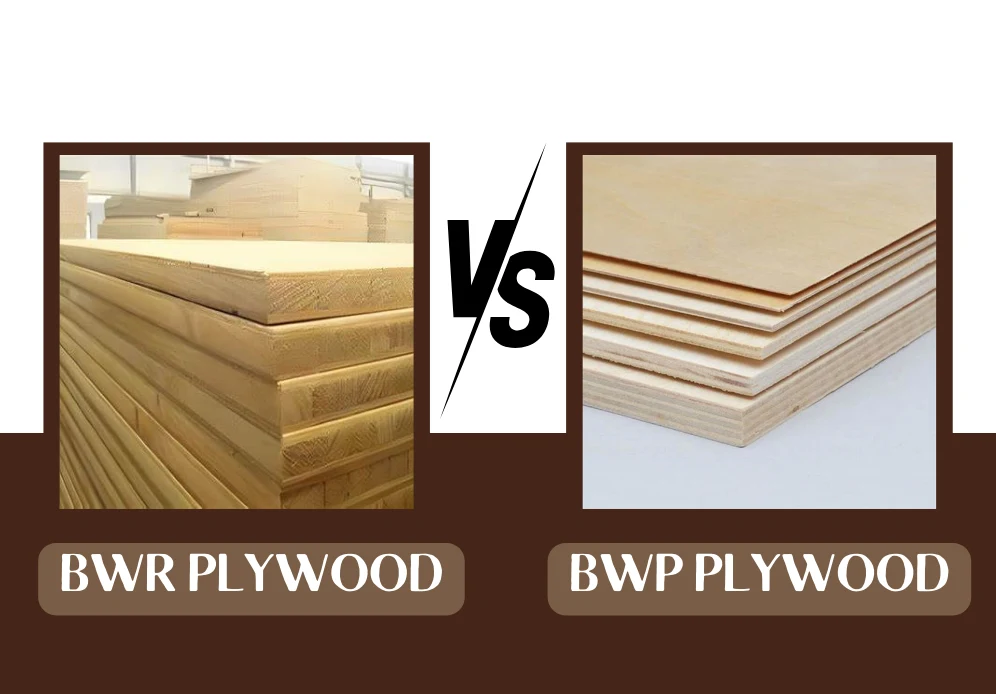
Gurjan describes the wood, not the glue. A gurjan-faced sheet can be MR (moisture resistant), BWR (boiling water resistant) or BWP (boiling waterproof), all covered by IS 303, the Indian Standard for general-purpose plywood. Marine plywood is made to a separate standard, IS 710. So a gurjan face does not make a sheet waterproof; for a kitchen sink unit you still need BWP or marine plywood. Our BWR vs BWP comparison shows which grade to use in each room.
How to Tell Gurjan-Faced Plywood
Look at the face and the edges, but treat colour, grain and weight as clues rather than proof, because other hardwood veneers can look similar and faces can be tinted. Confirm what you are buying on paper.
- Face colour. Gurjan is reddish-brown to pinkish-brown, warmer and darker than pale, creamy poplar.
- Grain and texture. Look for a fairly straight, even grain with a slightly coarse texture; small resin spots or streaks are typical of gurjan.
- The cut edge. At the edge you can see every layer. Reddish-brown face plies over a pale core suggest a gurjan-faced sheet with a light core; reddish-brown layers all the way through suggest gurjan throughout.
- Weight. All-gurjan sheets are noticeably heavier than sheets of the same size and thickness with a poplar core.
- Marking and paperwork. Check that each sheet is printed with the grade, the standard and the manufacturer's name, buy from the manufacturer or a dealer it supplies, and ask for the face veneer and the grade to be written on your quote and invoice.
Where Gurjan-Faced Boards Suit
Gurjan faces suit furniture and interior work where a hard, smooth face matters: wardrobes, beds, shelves, table tops, doors, panelling and kitchen units. In wet areas, the grade matters more than the face species.
| Use | Board and grade | Notes |
|---|---|---|
| Wardrobes, beds and shelves | Gurjan-faced BWR plywood or block board | 18–19 mm for carcasses, 6 mm for backs |
| Long shelves, wardrobe shutters, table tops and doors | Gurjan-faced block board | The batten core resists sagging and bowing |
| Kitchen units away from the sink and hob | Gurjan-faced BWR plywood | Humid, but water does not reach them regularly |
| Kitchen sink and hob units, bathroom vanities, utility areas | BWP or marine plywood | Not block board; seal every cut edge |
| Wall panelling and light partitions | 12 mm plywood, or block board for larger panels | A hard face takes laminate or veneer well |
Gurjan faces are also used on block board. MRS block boards, for example, use gurjan face veneers over a pine and poplar batten core with a double core veneer, bonded with boiling-waterproof resin and treated against termites and borers. Our guide to what block board is explains how it compares with plywood.
For kitchens, bathrooms and other wet areas, see the grades on our plywood page, where you can also ask for a quote.
Frequently Asked Questions
Can Gurjan Plywood Be Used Outdoors?
Only in the right grade. Outdoors, use BWP or marine plywood, protect the faces and edges with an exterior-grade paint, polish or sealant, and keep it out of standing water. A gurjan face alone does not make a sheet suitable for outdoor use, and block board is meant for dry, indoor areas.
Is Gurjan Plywood Termite-Proof?
Not because of the wood alone. Gurjan should not be relied on to keep termites and borers away; that protection comes from chemical treatment during manufacture. Ask the manufacturer what treatment the board has had. MRS block boards, for example, are termite and borer treated.
Is Gurjan Better Than Poplar or Eucalyptus Plywood?
For the face, gurjan is harder and denser than poplar, so it resists dents better and gives a firm base for laminate or polish. Poplar is light and is mostly used in the core. A sheet with gurjan faces over a sound poplar or eucalyptus core is a sensible balance of a hard face and a manageable weight; the quality of the core and the grade of the glue matter as much as the face species.