Standard Plywood Sheet Size In India
On this page 6 sections
Key takeaways
- The standard plywood sheet sizes in India are 8 × 4, 7 × 4, 7 × 3, 6 × 4 and 6 × 3 ft, and 8 × 4 ft (2440 × 1220 mm) is the most common.
- Choosing a sheet whose length matches your longest parts, such as a 7 × 4 ft sheet for 7 ft wardrobe sides, leaves fewer offcuts.
- Make a separate cutting list for each thickness and grade, because parts of different thicknesses cannot come out of the same sheet.
- Smaller sheets are easier to carry up stairs and into lifts, and custom sizes are an option when standard sheets would waste too much.
- MRS Woodcraft makes plywood from 4 mm to 25 mm thick in 8 × 4, 7 × 4 and 7 × 3 ft sheets, plus custom sizes.
The standard plywood sheet size in India is 8 × 4 ft (2440 × 1220 mm). The other standard sizes are 7 × 4, 7 × 3, 6 × 4 and 6 × 3 ft, and thicknesses usually run from about 3 mm to 25 mm. To cut waste, pick the sheet whose length matches your longest parts, or order a custom size.
Standard plywood sheet sizes in feet and mm
Plywood in India is sold by its size in feet, with a metric equivalent in millimetres. 8 × 4 ft is the most common size; the smaller sheets suit shorter parts and are easier to handle.
| Sheet size (ft) | Size in mm (approx.) | Good fit for |
|---|---|---|
| 8 × 4 | 2440 × 1220 | The most common size: full-height wardrobes, long panels, doors, panelling and large furniture |
| 7 × 4 | 2135 × 1220 | Wardrobes and units up to about 7 ft tall; easier to handle and transport than 8 × 4 |
| 7 × 3 | 2135 × 915 | Tall, narrow parts such as wardrobe shutters and door-height panels |
| 6 × 4 | 1830 × 1220 | Smaller furniture and small-scale work |
| 6 × 3 | 1830 × 915 | Small cabinets, shelves and small projects; the easiest size to carry |
MRS Woodcraft makes plywood in 8 × 4, 7 × 4 and 7 × 3 ft sheets, in thicknesses from 4 mm to 25 mm, and also makes custom sizes on request.
How to choose a plywood sheet size to reduce wastage
Choose the sheet whose length and width divide most evenly into the parts you need. Start from a list of finished part sizes, not from the sheet, and the right size usually becomes obvious.
- Make a cutting list. Write down every part with its finished length and width, grouped by thickness and grade. Parts of different thicknesses cannot come out of the same sheet, so each group needs its own plan.
- Match the sheet length to your longest parts. Two wardrobe sides about 7 ft tall and 2 ft deep come out of one 7 × 4 ft sheet with little left over, while the same cut from an 8 × 4 ft sheet leaves a 1 × 4 ft offcut.
- Match the sheet width to your part depths. A 4 ft (1220 mm) width splits into two parts about 2 ft deep, and a 3 ft (915 mm) width into three parts about 1 ft deep, which suits shelves and narrow cabinets.
- Draw the layout. Sketch each sheet to scale, or use cutting software, and allow a few millimetres for every saw cut and for squaring up the edges.
- Keep the grain in mind. On veneered sheets the face grain normally runs along the length, so plan visible parts such as shutters to follow it.
- Plan for offcuts. Use the leftover strips from large parts for small ones such as shelf fronts, fillers and frames in the same thickness.
- Check access before you order. Large sheets may not fit up a narrow staircase or into a lift. Smaller sheets are easier to carry and transport.
Custom plywood sizes
When standard sheets would leave large offcuts or the job repeats the same parts many times, plywood can be made to a custom size. MRS Woodcraft makes custom sizes on request.
Custom sizes are most useful for projects with many identical units, such as offices, hotels or housing projects with repeated cabinets and panels, where a sheet sized to the parts saves cutting time and material. When you ask, give the finished dimensions, thickness, grade and quantity so the manufacturer can tell you what is possible.
Plywood thickness options
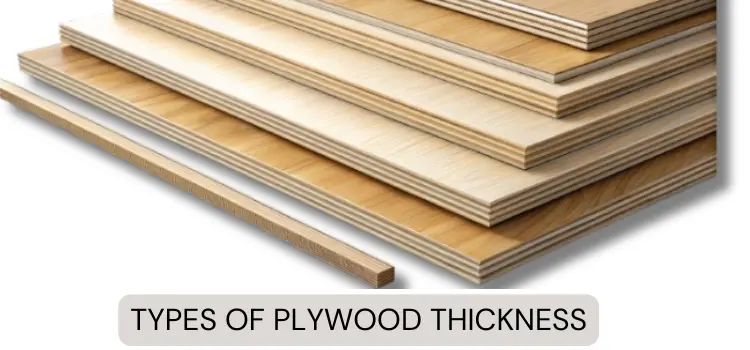
Thickness is chosen separately from sheet size. Plywood in India is commonly sold from about 3 mm to 25 mm thick, and the right thickness depends on the load the part will carry.
- 3–4 mm: curved and craft work, light decorative panels and packing cases.
- 6 mm: wardrobe and cabinet backs and drawer bottoms.
- 12 mm: light partitions and wall panels.
- 18–19 mm: wardrobe, bed, shelf and kitchen carcasses, tables and subfloors.
- 25 mm: heavy-duty and structural work.
Our plywood thickness guide has a full chart in mm and inches with the right thickness for each project.
Grade and sourcing
Size and thickness are only part of the choice; the grade must also suit the place where the board will be used.
- MR or commercial plywood for dry interiors.
- BWR (boiling water resistant) plywood for wardrobes, beds and kitchen units away from water.
- BWP (boiling waterproof) or marine plywood for kitchen sink and hob units, bathroom vanities, utility areas and exteriors.
See BWR vs BWP plywood for how the two water-resistant grades differ. If responsible sourcing matters to you, look for plywood certified by organisations such as the Forest Stewardship Council (FSC), which indicates wood from responsibly managed forests.
To check sheet sizes, thicknesses and grades for your project, see our plywood page or ask us for a quote.
Frequently Asked Questions
Is an 8 × 4 plywood sheet exactly 8 ft by 4 ft?
Close to it. An 8 × 4 sheet is usually listed as 2440 × 1220 mm, while exactly 8 × 4 ft is 2438 × 1219 mm. The difference is small, but measure the actual sheets before you cut, especially when parts must fit an exact opening.
How do I work out how many plywood sheets I need?
Add up the area of all the parts in each thickness and divide by the area of one sheet (an 8 × 4 ft sheet is 32 sq ft). That gives a minimum only. Draw the parts on a scaled sheet layout, allowing for saw cuts and grain direction, to get the real count, and keep a little spare for mistakes.
How do I check the quality of plywood before purchasing?
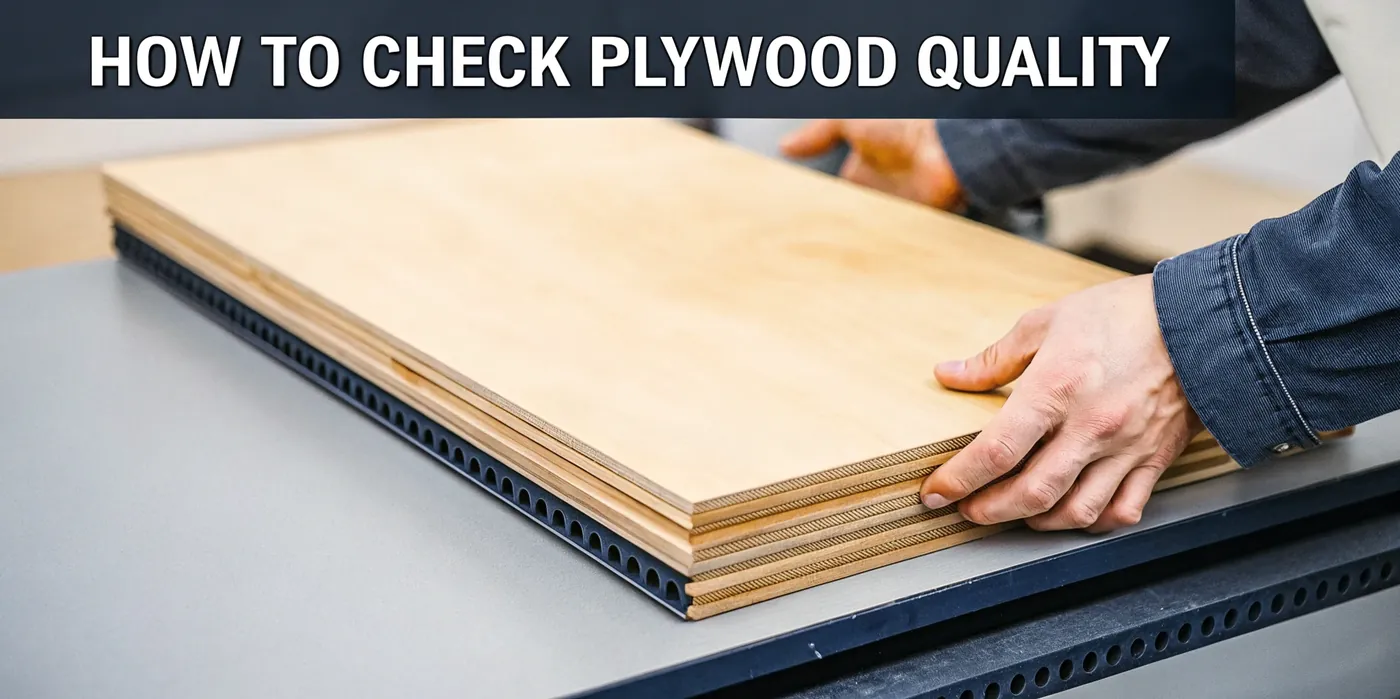
Check the surface for defects, make sure the sheet is flat and free from warping, and look at the edges for gaps between the layers. The thickness should be the same all over the sheet, and the grade marking should match what you ordered. Our guide on how to check plywood quality covers each check.